Tuesday, 26 November 2013

Mud flap bracket replacement

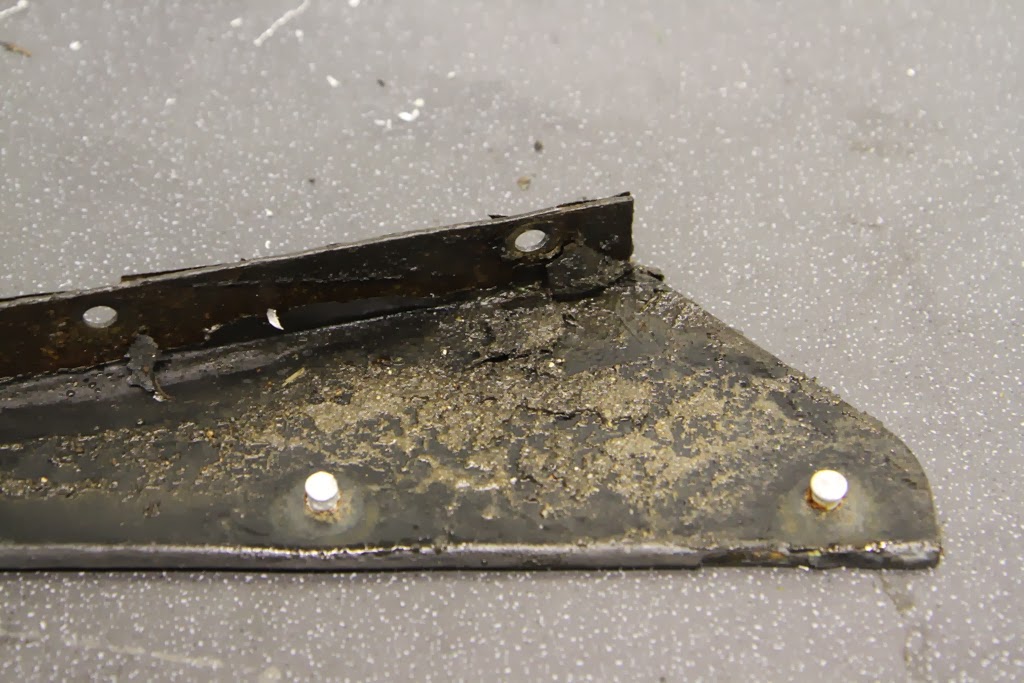
The mud flap brackets on the Defender are notorious for rusting. At this time, the vehicle has covered less than 16,000 miles and has not been used for any significant off-road purposes.

The pictures here show some of the visible rust:


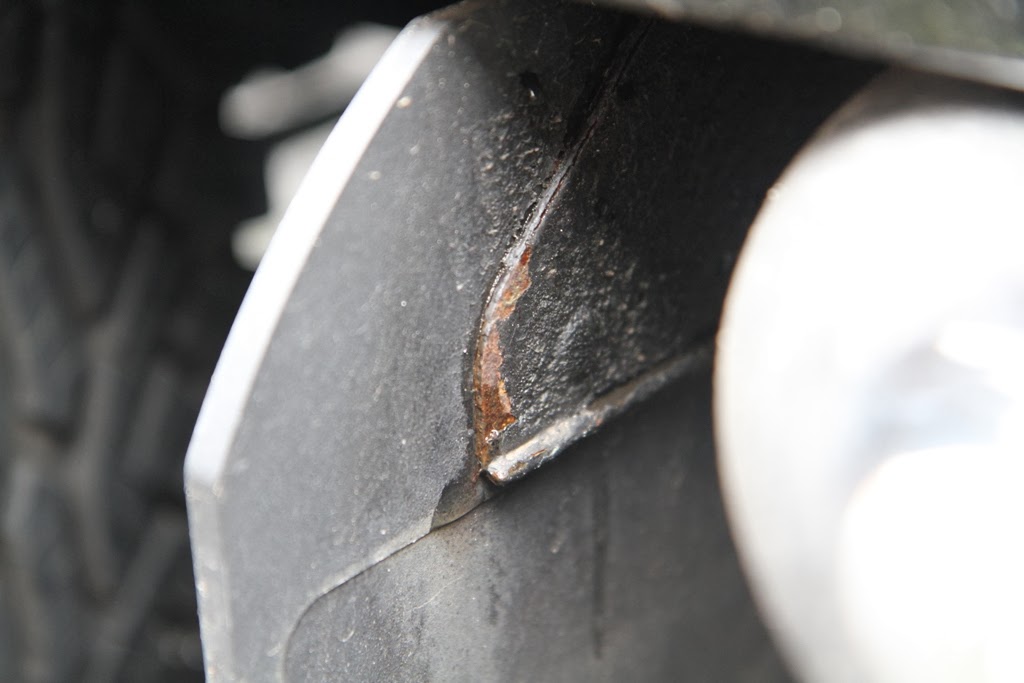

Removing the mud flaps showed the rust was much more advanced on the other faces of the brackets:


To remove the mud flaps from the brackets, the rivets were simply drilled out:


This showed that the brackets were also heavily rusted on the face covered by the mudflaps and the strengthening feature acts as a dirt trap:


Inspecting the mounting points on the outriggers and rear crossmember showed the rust had not caused any signigicant chassis damage:


The brackets could have been replaced under warranty, however replacing like for like would result in similar corrosion returning in a few years. As an alternative, stainless steel brackets were sourced from YRM ( YRM Stainless Steel Mud Flap Brackets ) which will not have the same weakness as the mild steel versions fitted by Land Rover. The brackets, as received, can be seen in this picture:

 
Before painting, the brackets were rubbed down with sand paper and cleaned to remove any surface contaminants. 

 A few coats of etching primer were applied to ensure a good key to the stainless steel.


The brackets were then sprayed with several coats of satin black paint.


Since the stainless steel is separated from the mild steel of the rear crossmember by paint and Waxoyl, there should be no problems with galvanic corrosion, however 2 different metals meet when the stainless steel bolts are fitted to the crosmember and outriggers.
YRM supply the stainless steel bolts as part of the kit, including nuts and washers for use if the captive nuts in the chassis are not useable. I have chosen to use the existing captive nuts and applied PTFE tape to all the stainless steel bolts before fitting.
 

After applying some Waxoyl to both the inner and outer faces of the crossmember and outriggers, the new brackets were attached with the original mudflaps.


Friday, 22 November 2013

Steering Lock Stop Adjustment

In order to improve the tuning circle of the vehicle, the steering lock stops were adjusted to allow the wheels to turn further. It is thought that Land Rover don't pay particular attention to adjusting these stops during production.

The steering lock stops consist of a bolt that can be adjusted and a metal plate which the bolt head comes in contact with to restrict the amount the steering wheels can turn, thus preventing the tyres from rubbing on the radius arm.
The adjustable bolt is shown here on the swivel ball housing:
 

 The picture below shows the lock stop on the opposite side in contact with the metal plate to stop further turning:

Before making any adjustments, the distance between each tyre and the radius arms were measured on full lock. These are shown here:


Each side was adjusted to bring the distance from the tyre to the radius arm from around 38mm to around 15mm. The new distances can be seen in the pictures below:


The steering lock stop bolt before adjustment:


The steering lock stop bolt after adjustment:


Friday, 18 October 2013

Rear Auxillary Power Socket


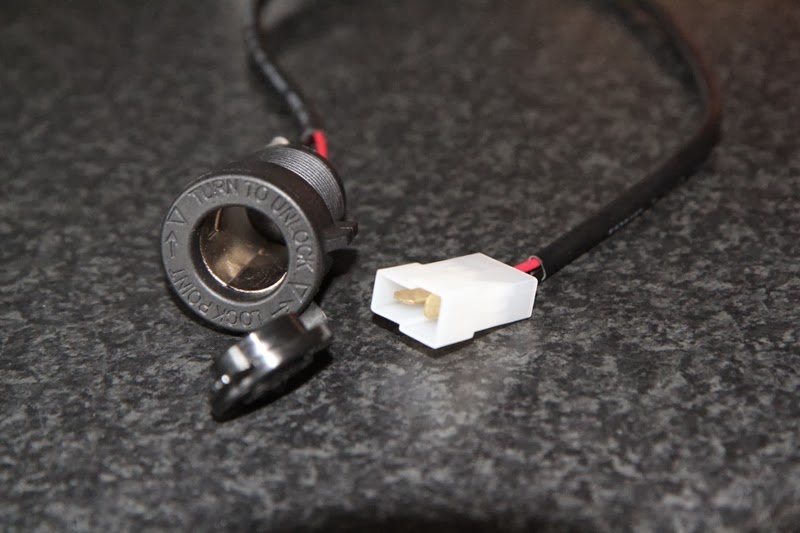
I purchased a 12V power supply socket from ebay to fit to the rear of the vehicle. This is a very common modification that utilises the power feed at the rear most 2.4 tdci Defenders have for auxillary trailer power. The description of the ebay item was "12V 20A Fused Motorcycle Waterproof Cigar Cigarette Lighter Power Supply Socket".


The plug is located behind the rear speaker on the drivers side of right hand drive vehicles (A tip when removing the trim piece: remove the stop/tail light to make things easier). It is a 2 way T-connector with a black wire and a purple wire. It can be seen below in the state it left the factory, taped to the loom:

 
To maintain a factory look, I sourced a matching connector from polevolt.co.uk . The required connector could not be bought as a single item, so the cheapest way to get the connector was to buy a kit with both male and female connectors. The part number for the kit is MC2TKIT.
 
The connector and fuse carrier on the power socket were cut off and the 6.3mm spade fittings were crimped on to the wires (the fuse was surplus to requirements since there is already a 20A fuse under the drivers seat (Fuse 2):

 
The spade fittings were then clicked in to the connector housing to complete the assembly:

 
 The next part of the job was mounting the socket in the trim panel; to do this, a cone cutter was used to make a hole with a 29mm diameter.
 
The socket was then mounted in the hole and attached with the supplied clamping ring.
 
 
The 2 way T-connector was plugged into the factory loom and the trim and speaker were fixed back into position:
 
The picure below shows the finished product:


And finally a close up of the socket with a rechargeable torch in situ:


Saturday, 12 October 2013

Oil service (Oct 2013)

Interim oil service today. As I often have short journeys, the car requires the oil changed between services.
The B service was carried out by Lancaster Land Rover on 5th April 2013 with 11,888 miles on the clock.


3,460 miles later, the clock now reads 15,348. The picture below shows the instrument cluster just before I drained the oil, with the engine temperature raised to decrease the viscosity.


The pictures below show the oil before the change and the service items used:


The oil filter cover was loosened a few turns, using a 27mm ring spanner, to allow the engine oil to drain.


The sump plug was then removed using a 13mm ring spaner and the oil drained.


While waiting for the oil to drain, the filter cover O-ring and oil filter element were replaced and the unit had some fresh oil poured.


At this point I inspected the difference between the old and new sump plugs - it was clear to see why a new plug is recommended at each service, with the rubber seal on the old plug remaining in the compressed state.


The new filter was screwed back in place and tightened to a torque of 25Nm.


I couldn't find an exact figure for the oil capacity of the engine, so I filled it gradually until the correct level showed on the dipstick, which was 6.5 litres.


After a 10 mile drive the oil level was checked, the condition of the oil can be seen below: